Pollution activities
Unit with activities & plans to explore how to protect us & our environment
We are in danger of destroying ourselves by our greed and stupidity. We cannot remain looking inwards at ourselves on a small and increasingly polluted and overcrowded planet.
Stephen Hawking
Introduction
- Introduction
- Big ideas, concepts, facts, & outcomes
- Science content concepts & outcomes
- Inquiry & science process concepts
- Pedagogical overview
- Activities sequence
- Focus questions
- Materials
- Scoring guide suggestions
- Unit activity sequence
- Introductory activities
- Air pollution
- Land pollution
- Water pollution
- Particulate matter exploration
- Activity 1 - Acid Rain
- Activity 2 - Ozone Pollution: Smog Alert - rubber band experiment
- Activity 3 - Effects of the use of fire in the deforestation of the rain-forests on the atmosphere
- Activity 4 - Algae growth with various amounts of fertilizer
- Activity 5 - AChromatography, demonstrations of how hazardous materials spread through the soil.
- Activity 6 - Water off a duck’s back (oil pollution)
- Activity 7 - Oil spill cleanup device
- Activity 8 - Water on Earth model
- Lab notes
- Lab note 1 - Acid Rain
- Lab note 2 - Ozone Pollution: Smog Alert - rubber band experiment
- Lab note 3 - Effects of the use of fire in the deforestation of the rain-forests on the atmosphere
- Lab note 4 - Algae growth with various amounts of fertilizer
- Lab note 5 - Chromatography, demonstrations of how hazardous materials spread through the soil.
- Lab note 6 - Water off a duck’s back (oil pollution)
- Lab note 7 - Oil spill cleanup device
- Lab note 8 - Water on Earth model
- Support materials
- Acidification On Animals
Introductory focus questions for the quality of air, water, and land quality Vs. pollution; with resources and lesson plans, activities, and lab notes to facilitate a review and develop a deeper understanding of pollution, its causes, and plan sustainability goals and plans.
Pollution is a term used to refer to a variety of ecological problems created by humans or any unpleasant environmental situation.
A pollutant is any substance that is increased beyond the level that organisms in the ecosystem can use or tolerate.
Pollutants are not limited to the visible by-products of a technological society - plastic, tin cans or smog. Often, the effects of pollution are not obvious for some time after the damage has already been done to the environment. Many types of water pollution result in lowering the amounts of oxygen in the water.
Commercial fertilizers consist of inorganic raw materials essential for plant growth. When fertilizers are added to aquatic habitats, they promote rapid growth and decay of green plants, thus disrupting the balance in the system.
Acid rain is often the result of many particles in the air becoming a part of the water cycle. Many of these particles are introduced to the water cycle through smoke from factories and vehicles. The effects of pollution are widespread and are not restricted to the area of contamination, but rather, the pollutants are spread throughout the environment through various means.
When contamination does occur, many animals and plants within the ecosystem are disturbed or prohibited from doing routine activities essential for survival. Fortunately, there has been a great technological advance in methods for cleaning up pollution in our environment, however, the effects of pollution on our environment still have catastrophic consequences.
Background resources:
This plan is designed for learners who have very little prior knowledge of
Related study topics:
- Environment & environmental factors - unit with plans, activities, & lab note book
- Community - A unit or packet with a sequence of activities & plans to develop a deeper understanding of the relationships of organisms & populations as communities within environments. Includes hands-on activities with plants, seeds (embryo, cotyledon, & seed coat), crickets, anoles, decomposers, and terrariums.
- Ecosystem - A unit or project with a sequence of activities & plans to develop a deeper understanding of the interdependence required to maintain healthy ecosystems. Investigations include study of environmental factors, organisms and their needs, populations, communities, life cycles, food webs and energy cycle, water cycle, carbon dioxide - oxygen cycle, nitrogen cycle, and decomposition.
- Environmental quality - resources for pollution, climate change, & ...
- Professional educator notes on - Environmental education (EE) & sustainable development (SD)
- Sustainability notes
Planning information
Learner background information
A plan designed for learners who have prior knowledge in cause and effect, use of observations to make inferences, models as explanations for observable and non observable events, and working in groups.
Learners in a curriculum similar to
- Organisms - grade 1
organism birth death
habitat food web detritus - Life cycles- grade 2
growth development life cycle genetic identity - Populations - grade 3
population food chain plant eater animal eater
biotic potential generation
plant and animal metamorphosis
food web community predator-prey - Environment - grade 4
environment environmental factor
range optimum range - Communities - grade 5
photosynthesis community food transfer
producers consumers decomposers raw materials - Ecosystems - grade 6
ecosystem
water cycle
food-mineral cycle
oxygen-carbon dioxide cycle
pollutant - Human and environmental health - middle and junior high
- Sustainable practices - integrated throughout
Intended learnings & learners thinkings
See for more information on what to include in general planning
Content concepts or outcomes
(Source concepts & misconceptions)
Big ideas
- Life requires optimal ranges of environmental factors for survival that are free from harmful pollution. Shelter, temperature, light, nutrients or food as a source of energy, water. Since pollution can interfere with these and it is often widespread, pollution is a detrimental to us and our environment.
Concepts and facts
- Better decisions (claims) are made when information is verified, with evidence and reasoning, before being considered accurate and used to reason and develop explanations and models to understand the world and make decisions.
- People make better decision when they understand and consider the positive and negative influences that effect their decision making.
Outcome
- Describe ways communities use scientific concepts to safeguard the Earth's resources and environment.
- Describe that synthetic materials, derived from natural resources, have an impact on society.
- Construct a scientific explanation, supported by evidence, on how environmental and genetic factors influence the growth of organisms.
- Make arguments, supported by evidence, demonstrating how the body functions as a system of interacting subsystems composed of groups of cells that can be affected by pollution.
- Make an argument supported by evidence showing pollution changes the physical or biological components of an ecosystem and its populations. Use accurate verifiable information to consider and decide how objects can be balanced or made more stable.
- Describe strategies to maintain biodiversity and sustain ecosystems.
- Describe how pollution is transported through complex motions and interactions of air masses as a results of changes in weather conditions driven by unequal heating and rotation of the Earth's atmospheric and oceanic circulation. And how these descriptions can be used to monitor changes and protect organisms.
- Evaluate the evidence supporting claims that changes in environmental conditions may result in: (1) increases in the number of individuals of some species, (2) the emergence of new species over time, and (3) the extinction of other species.
- Construct an explanation based on evidence on how the availability of natural resources, the occurrence of natural hazards, and changes in climate have influenced human activity..
- Use accurate verifiable information to consider and decide how objects can be balanced or made more stable.
Science concepts: physical, earth, life
Big ideas:
Healthy environments are essential for the survival of all life on Earth and interact with materials (objects) in the environment. These interactions occur according to the laws of natural science (physics, biology, chemistry) and can be used to predict what will happen when different substances are introduced. However, knowing what will happen doesn't inform us as to what specific amounts are detrimental to different organisms, environments, or human life on Earth.
Related concepts
- Life requires air, food, shelter, and ... which are provided by the environment.
Outcome
- Explain why healthy environments are essential for the survival of life on Earth.
- Utilize observations and measurements to identify materials based on their distinctive properties.
- Explain how the gravitational force exerted by Earth on objects influences their downward motion.
- Analyze and interpret data on the properties of substances before and after their interaction to determine if a chemical reaction has taken place.
- Create a model that predicts and describes the alterations in particle motion, temperature, and state of a pure substance when thermal energy is either added or removed.
Source Life science knowledge base
Anticipated learner thinkings & misconceptions
- Water is water - pure water.
- Air is pure so when rain falls through it, it falls as pure water.
- When impurities are put on top of dirt, they basically stay where they drop or maybe mix a little if the soil is loose or mixed physically by someone.
- Rain travels through soil without washing other things with it.
- When algae (and plants & animals) decomposes they just break up into smaller pieces like sand from larger rocks.
Inquiry, process, & cross cutting concepts & skills
- Big ideas: Science (claim evidence & reasoning) can be used to understand and explain cause and effects of pollution in the world.
- When I experiment I collect observations that describe how different properties change (become variables) when objects and systems interact. This helps me make claims, explain what is happening, and to predict what might happen in the future.
- Inquiry concepts
- Process concepts
- Perspective concepts
Cross cutting
Big ideas: See also Concepts & misconceptions
Related concepts and facts
- Observational data and reasoning is used to explain interactions. Evidence is something that is observed and can be used to understand what is happening and make predictions about future changes.
- Models are structures that correspond to real objects, events, or classes of events.
- Develop a model that illustrates the existence of particles too minuscule to be observed.
- Explanations are based on observation derived from experience or experimentation and are understandable.
- Pictures or symbols represent objects.
- Variables describe properties that change and can be used to explain interactions.
- Relative position describes changes in positions of objects when they are moved relative to a common position.
- Systems are used to describe objects that interact together.
- Interactions can be explained by describing how variables change within a system and how a system interacts with other objects or systems.
- Objects change.
- Change can be observed and recorded as before, during, after.
- Change is observed through properties of the object.
- Change can vary.
- Constancy Somethings stay the same and some things change.
- Constancy can sometimes be observed during a very slow rate of a change process or focusing on a particular property.
- When I experiment I collect observations that describe how different properties change (become variables) when objects and systems interact. This helps me make claims, explain what is happening, and to predict what might happen in the future.
- Inquiry concepts
- Process concepts
- Perspective concepts
Outcome -
- Describe solutions to problems based on their likelihood of meeting criteria and constraints.
- Plan and conduct fair tests to control variables and identify areas for improvement in models or prototypes.
- Apply scientific principles to design methods for monitoring and minimizing negative human impact on the environment.
- Present an argument supported by evidence explaining how population growth and per-capita consumption of natural resources affect Earth's systems.
- Ask questions to clarify evidence of the factors responsible for the rise in global temperatures over the past century.
- Use evidence to describe environmental pollutants in the environment that may be harmful to life.
- Describe ways communities use scientific concepts to safeguard the Earth's resources and environment.
- Describe that synthetic materials, derived from natural resources, have an impact on society.
- Construct a scientific explanation, supported by evidence, on how environmental and genetic factors influence the growth of organisms.
- Make arguments, supported by evidence, demonstrating how the body functions as a system of interacting subsystems composed of groups of cells that can be affected by pollution.
- Make an argument supported by evidence showing pollution changes the physical or biological components of an ecosystem and its populations.
- Describe strategies to maintain biodiversity and sustain ecosystems.
- Describe how pollution is transported through complex motions and interactions of air masses as a results of changes in weather conditions driven by unequal heating and rotation of the Earth's atmospheric and oceanic circulation. And how these descriptions can be used to monitor changes and protect organisms.
- Evaluate the evidence supporting claims that changes in environmental conditions may result in: (1) increases in the number of individuals of
some species, (2) the emergence of new species over time, and (3) the extinction of other species. - Construct an explanation based on evidence on how the availability of natural resources, the occurrence of natural hazards, and changes in
climate have influenced human activity. - Describe solutions to problems based on their likelihood of meeting criteria and constraints.
- Plan and conduct fair tests to control variables and identify areas for improvement in models or prototypes.
- Apply scientific principles to design methods for monitoring and minimizing negative human impact on the environment.
- Present an argument supported by evidence explaining how population growth and per-capita consumption of natural resources affect Earth's systems.
- Ask questions to clarify evidence of the factors responsible for the rise in global temperatures over the past century.
- Define the criteria and constraints of a design problem with sufficient precision to ensure a successful solution, taking into account relevant
scientific principles and potential impacts on people and the natural environment that may limit possible solutions.
Sub outcomes
- Develop a model that illustrates the existence of particles too minuscule to be observed. See particles compared to hair.
- Utilize observations and measurements to identify materials based on their distinctive properties that may harm organisms.
- Explain how the gravitational force exerted by Earth on objects (as potential pollutants) influences their downward motion.
- Analyze and interpret data on the properties of substances before and after their interaction to determine if a chemical reaction has taken place.
- Create a model that predicts and describes the alterations in particle motion, temperature, and state of a pure substance when thermal energy is either added or removed.
Other possible concepts
Design
- Define the criteria and constraints of a design problem with sufficient precision to ensure a successful solution, taking into account relevant scientific principles and potential impacts on people and the natural environment that may limit possible solutions.
History of science and development of technology - perspective of science
See also Concepts & misconceptions also science, math, technology timeline
- People have practiced science and technology for a long time.
- Science develops over time.
- Science investigators such as
Scoring guides suggestions (rubric)
Pollution
Top level
- Explains how an optimal range of environmental factors like: temperature, light, water can be protected from pollution so as to maintain a healthy environment that will sustain an organism's survival.
- Explains organisms can die if they don't get all necessary needs for survival met.
Lower level
Pedagogical Overview
Strategies to achieve educational learnings
Instructional Procedure
Based on learning cycle theory & method
Focus question
Unit focus questions:
- What is pollution?
- What sources of pollution are in our community?
- What does our community do to protect us from pollution?
Activities Sequence to provide sufficient opportunities for students to achieve the targeted outcomes.
Make sure learners have the prior knowledge identified in the background information.
Introductory activities:
- Provide learners with the notes for the introductory activities for air, land, and water pollutants.
- Review the activities, discuss each, and organized how to explore them to collect information to answer questions related to each and the focus questions.
- After data is collected, select one of the three to begin a discussion and take notes on what is discovered as well as a list of questions and additional explorations.
- Continue for each of the three introductory sheets until you believe it would be helpful to have another organizational meeting to outline additional investigations or explorations and set goals for the unit. At this time the additional eight activities can be introduced along with making personal goals to refused, reduced, salvaged, reuse, recycle, repurpose to reduce their pollution footprint. To achieve this an inventory might be made of what is being done and what could be done in their community to achieve these.
- Particulate matter exploration activity - If you don't have a sensor or sensors, you could chart the air quality from weather apps and discuss what conditions may have caused any changes.
Activities 1 - 7 First written by Steve Wiesler and Chad Beckius
- Activity 1 - Acid Rain
- Activity 2 - Ozone Pollution: Smog Alert includes Rubber band air quality test with a control
- Activity 3 - Effects of the use of fire in the deforestation of the rain-forests on the atmosphere
- Activity 4 - Algae growth with various amounts of fertilizer
- Activity 5 - Chromatography, demonstrations of how hazardous materials spread through the soil.
- Activity 6 - Water off a duck’s back (oil pollution)
- Activity 7 - Oil spill cleanup device
- Activity 8 - Water on Earth model
Materials
- PH paper, small, medium, and larger containers, matches, rubber bands, magnifiers, lactic bags, hangers, fish tank, paper towels, food coloring, droppers, small containers, BTB, fertilizer pellets, soil, washers
- Lab note 1 - Acid Rain
- Lab note 2 - Ozone Pollution: Smog Alert -include rubber band air quality test with a control
- Lab note 3 - Effects of the use of fire in the deforestation of the rain-forests on the atmosphere
- Lab note 4 - Algae growth with various amounts of fertilizer
- Lab note 5 - Chromatography, demonstrations of how hazardous materials spread through the soil.
- Lab note 6 - Water off a duck’s back (oil pollution)
- Lab note 7 - Oil spill cleanup device
- Lab note 8 - Water on Earth model
Resources
Lesson Plans
Activity 1 - Acid rain
First written by Steve Wiesler and Chad Beckius
Materials
- Ph paper and glass jars
- Lab note -
See - Acidification On Animals
Focus questions:
- What is fresh water?
- What is acid rain?
Learning outcomes:
- Explain how different water sources have different levels of pH.
- Learners will test different samples of water and explain how water sources are different based on the different substances that flow into them. Pollution.
Suggested procedures overview:
- Put learners in groups, focus their attention, and assess their initial understanding of the focus questions.
- Activity - Learners will test different samples of water and explain how water sources are different based on the different substances that flow into them. Pollution.
Exploration -
- Put learners in pairs.
- Ask. How do we get clean drinking water?
- Listen to the responses and have a discussion about the importance of keeping a source of fresh drinking water.
- Have learners clean three glass jars of water and allow them to drip-dry.
- Discuss how to collect rainwater, river water, and lake water. (Could have them collected in advance).
- Demonstrate how to measure pH by dipping pH paper into the water samples.
- Record the pH values as well as the weather conditions at the time of sampling.
- Have them organize the data in graph or table form and discuss the results.
Invention -
- Discuss the data and make explanations about the water as a source for drinking.
- Explain and discuss what percent of the earth's surface is covered by water. Illustrate with a map and or globe.
- After listening to the responses identify the percentage and ask, what percent of the available water is fresh water.
Discover
Describe the information in the Acidification On Animals - chart and the different affects on different animals.
Activity 2 - Ozone Pollution: Smog Alert
First written by Steve Wiesler and Chad Beckius
Materials:
- 4 small rubber bands, 1 wire clothes hanger, magnifying glass, plastic bag
- Several white cards or plastic, each about 4 square inches, hole punch, string or fishing line, patroleum jelly (vaseline)
Focus questions:
What affect will outside air have on different objects?
Learning outcomes:
- Collect data from an experiment and describe how air pollution affects objects.
Suggested procedures overview:
- Put students in groups, focus their attention, and assess their initial understanding of the focus questions.
- Activity - Collect data from an experiment and describe how air pollution affects objects.
Exploration
- Put learners in pairs.
- Discuss causes and effects of air pollution.
- Ask. We are going to test the air. Where might we place our monitors? Outside, inside, ...
- Bend two hangers so that when you stretch the rubber bands over the hangers, they are tight.
- Hang the hangers outdoors in a shady place so its out of the sun and leave it there for two weeks and hang the other in a sealed plastic bag next to it to serve as a control.
- Take a white card or piece of plastic about 4 square inches, punch a hole tie string or fishing line, cover one side with patroleum jelly (vaseline).
- Place the air testers where decided.
- When two weeks are up, look at the rubber bands. and the cards.
- Display information for the class to view.
Invention
- Recall and review data.
- Do they look the way they did before, or are they cracked?
- Are they clear or do they have particles that weren't there originally?
- Check with magnifying glass, too.
- Touch the rubber bands.
- Do they feel the way they did before, or are they hard?
- If they look and feel the way they did before, then the air is quite clean.
- If they look cracked and felt hard, then the air is polluted.
- Leave rubber bands out for a few more weeks.
- Discuss their observations and inferences from both experiments.
- What are materials are on the patroleum jelly?
- Where did they come from?
Discover
- What else might be in the air?
- How can we find out?
Activity 3 - Effects of fire & wildfires on the atmosphere
First written by Steve Wiesler and Chad Beckius
Materials:
- 10-gallon fish tank, glass lid for fish tank, sand or gravel, 30 to 40 wooden matches, lime-water (calcium hydroxide), two small glass beakers or jars, water, long fireplace matches
- Lab notes -
WARNING: This activity should be conducted under adult supervision. And outside. The container can be sealed and brought in when it is safe to do so.
Focus questions:
- How does smoke pollution affect the environment?
Learning outcomes:
- OBSERVE how burning gives off gases, ash, heat, and light and describe how each can be a pollutant or advantageous to organisms and the environment.
Suggested procedures overview:
- Put students in groups, focus their attention, and assess their initial understanding of the focus questions.
- Activity - OBSERVE how burning gives off gases, ash, heat, and light and describe how each can be a pollutant or advantageous to organisms and the environment.
Exploration
- Put learners in pairs.
- Cover the bottom of the fish tank with 8 centimeters of sand and/or gravel.
- Take 30 to 40 matches and place them in a tight circle in the center of the tank.
- Fill the two beakers or jars with limestone. Place one jar inside the tank and one jar just outside the tank.
- Wet the outside of the tank with water so that the lid will form a tight seal with the tank.
- Light the matches with one of the long, fireplace matches and then immediately slide the glass lid onto the tank.
- The matches will burn and give off billows of smoke, soot, and ash.
- Leave the lid on the tank and observe the beakers of lime water.
- Record observation.
Invention
- List observations.
- Ask. What do you observe?
- What would be considered beneficial? Heat and light in specific situations would be essential for survival. Ash can be beneficial as fertilizer and inhibit growth of some organisms that infect other organisms.
- What would be considered pollution? Smoke, soot, too much heat, ash.
- Discuss the affects of each.
- Continue to make
observations for the next two to three days.
Discovery
Activity 4 - Algae growth with various amounts of fertilizer
First written by Steve Wiesler and Chad Beckius
Materials
- For each team of four- 4 tumblers, 1 vial, alga culture, 2 light sources, and 1 package of fertilizer pellets, bottle of BTB
- Lab notes -
Focus questions:
- How does fertilizer affect the environment?
Learning outcomes:
Collect data to model and explain how fertilizer promotes plant growth, plants grow, die, and decompose; which produces carbon dioxide. Which can be a pollutant in excess.
Suggested procedures overview:
- Put students in groups, focus their attention, and assess their initial understanding of the focus questions.
- Activity - Collect data to model and explain how fertilizer promotes plant growth, plants grow, die, and decompose; which produces carbon dioxide. Which can be a pollutant in excess.
Exploration
- Ask. What is the function of commercial fertilizers?
- Introduce algae.
- Ask. What would you prediction an effects of fertilizer on algae might be. (remember, algae are green plants). It will help th plants grow better.
- Learners should
set up four tumblers of aged water with varying amounts of fertilizer, but with
similar quantities of algae
- Tumbler 1 – algae in aged water with no fertilizer
- Tumbler 2 – algae in aged water with a little bit of fertilizer (3 pellets)
- Tumbler 3 – algae in aged water with some fertilizer (6 pellets)
- Tumbler 4 – algae in aged water with a lot of fertilizer (12 pellets)
- Tumblers should be filled about two-thirds full of aged water before the fertilizer pellets are added to three of them.
- After each is filled with water and fertilizer, add about one-half vial of alga culture to each tumbler from the classroom alga-culture.
- Label each tumbler as to the amount of fertilizer it contains, the date, and the group members’ initials.
- Place all of the tumblers in a circle underneath the light source to ensure they all receive the same amount of light.
- Students should use charts to graphically display the amount of growth in each tumbler each day. The chart could use terms like “no growth, some growth, most growth.”
- When a layer of dead algae is discovered at the bottom of the cup, call this to the class’s attention. Ask the children what they think will happen to the dead algae.
- What happens to organic matter?
- Ask the student’s how the decomposition of the dead algae affects the concentrations of oxygen and carbon dioxide in the water.
- Remove a sample of the dead algae from each culture and place it in freshwater for a couple of days, then test each sample with BTB.
- Ask the students what they discovered.
- Visually display these findings on a chart.
Invention
- Ask. What is a pollutant? A pollutant is any substance that is increased beyond the level that organism can use or tolerate.
- In this case, the dead algae caused by the fertilizer is the pollutant.
- Through discussion, children should realize that excess carbon dioxide occurs as a result of increasing the amounts of certain materials in an aquatic ecosystem.
Discover
Activity 5 - Chromatography demonstrations of how hazardous materials travel through the soil
First written by Steve Wiesler and Chad Beckius
Materials:
- Large stack of paper towels, food coloring, water, several paper plates, plastic film canisters or other vials, spray bottle filled with water
- Lab notes -
Instructor’s note: When preparing for this sequence of activities, we could not find any models to demonstrate how chemical spills travel through soil. This is an attempt at such a model. The first model demonstrates how chemicals are transported along the surface of dry soil or sand. The second model demonstrates how chemicals are transported through dry soil or sand. It is important for people to understand how chemicals are transported through soil in order to gain an understanding of how important and how tricky it is to clean up any spills.
Focus questions:
- Do pollutants stay in one place?
Learning outcomes:
Collect data to model how substances can be physical broken into smaller pieces and washed away with water to spread out and flow through soil.
Suggested procedures overview:
- Put students in groups, focus their attention, and assess their initial understanding of the focus questions.
- Activity - Collect data to model how substances can be physical broken into smaller pieces and washed away with water to spread out and flow through soil.
Exploration
- Organize learners into pairs and groups.
- Ask. Do you think chemicals move through soil?
- Give each student the materials.
- Explain that they are going to create models of how chemicals travel across the surface of the ground and how chemicals travel through soil.
- In each film canister, pour 1tsp.of water, and 1 drop of each color of food coloring, red, blue, green, and yellow.
- Place a paper towel on a plate.
- Pour the contents of the vials onto the center of one paper towel spread out flat.
- Observe the results.
- On another paper plate, place a large stack of paper towels.
- Pour the contents of another vial in the center of the stack.
- Observe the results (may look through the stack of paper towels).
Invention
- Ask students what each modeled.
- Using this model, what inferences can be made about chemical spills and the environment.
- Using a spray bottle, mist the paper towels.
- Observe the results.
- Ask students what this demonstrates.
- Ask students to describe possible ways to clean up such a spill based on their findings.
Discover
Activity 6 - Water off a duck’s back (oil pollution)
First written by Steve Wiesler and Chad Beckius
Materials
- Cooking oil, shallow containers, eye dropper, hand lens, feathers (natural), liquid detergent (dish-washing liquid), hard-boiled eggs.
- Lab notes -
Focus questions:
- How will oil interact with organisms in the environment?
Learning outcomes:
- Describe how oil can be a harmful pollutant and difficult to remove from organisms and the environment.
Suggested procedures overview:
- Put students in groups, focus their attention, and assess their initial understanding of the focus questions.
- Activity - Describe how oil can be a harmful pollutant and difficult to remove from organisms and the environment.
Exploration
- Organize learners into groups and pairs.
- Give each group a shallow pan partially filled with water.
- Add one drop of oil to the water and observe the interaction of oil and water and measure the area covered by the oil spill.
- Estimate the area what would be affected by an oil spill involving a tanking truck holding 8,000 gallons of oil and a ship holding 30,000 gallons of water.
- Put oil into a small container and add three boiled eggs.
- Observe the interaction and remove one egg after five minutes and observe the egg before, during, and after peeling off the shell.
- Try to remove the excess oil off the shell before attempting to peel the egg.
- Peel the egg and observe the interior.
- Remove the second egg after 15 minutes and the third egg after 30 minutes and follow the same procedure as the first egg.
- Record and discuss the observations.
- Examine a feather with a hand lens and sketch what you see.
- Dip the feather into water and sketch the results. Continue this process after dipping the feather in oil.
- Clean the feather with water and detergent and sketch what you see after viewing it with the lens.
Invention
- Regroup as a class and groups demonstrate their projects.
- Compare all the sketches and discuss the changes in the feather after it was exposed to the oil and then to detergent.
- Discuss what effect these changes could have on normal bird activity.
- Discuss other possible effects on birds from an oil spill and the impact of oil spills on other wildlife species, on humans, and on the environment.
Discover
Activity 7 - Oil spill cleanup device
First written by Steve Wiesler and Chad Beckius
Materials
- For each group or student – clear drinking glass, tap water, 6-8 washers, empty prescription medicine container, large enough for the washer to fit in, 24-inch
- Lab notes -
Focus questions:
- How are oil spills contained?
Learning outcomes:
- Make and describe how an oil containment system works.
Suggested procedures overview:
- Put students in groups, focus their attention, and assess their initial understanding of the focus questions.
- Activity - Make and describe how an oil containment system works.
Exploration
- Organize learners into groups and pairs.
- Fill the glass three-fourths full with water.
- Place 2 to 3 washers in the container and tie the ends of the strings around the top of the container. Tie the other ends of the strings together to form a loop.
- Place the container in the glass of water and support it upright by holding the loop.
- Continue to add washers until the top of the container is just below the surface of the water. Remove the container and pour out any water, but keep the washers inside.
- Pour the oil into the glass, then slowly lower the weighted container into the glass.
- With the loop, support the container so that its top is just below the surface of the oil.
- When the container fills, raise it, pour its liquid contents into the bowl, and observe the liquid.
- Continue to fill the container until all the oil is removed from the glass.
Invention
- Regroup as a class and groups demonstrate their projects.
Discover
Activity 8 - Water on Earth model
Materials
- Globe, different sized containers, liter, 500 ml, 100 ml, 10 ml
- Lab note 8
- Lab notes 9
- Lab notes 10
Focus questions:
- How much water on Earth is drinkable?
Learning outcomes:
- Make and describe a model that shows the percentage of water on earth that is fresh.
Suggested procedures overview:
- Put students in groups, focus their attention, and assess their initial understanding of the focus questions.
- Activity - Make and describe a model that show the percentage of water on Earth that is fresh and where it is located. Fresh water in glaciers, groundwater, and surface water. Salt water in the oceans.
Exploration
- Organize learners into groups and pairs.
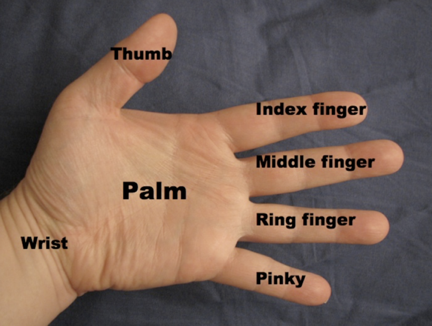
- Have each student decide which finger they want to use as the landing indicator.
- Tell the learners you will toss them the globe and they will say (right or left) hand and (thumb, index finger, middle finger, ring finger, or pinky) Toss a globe, and have another learner record if the position of their choice is on water or land.
- Repeat the toss to all students in the class. If there is less than 25 students, then have some repeat a catch till you get to 25. or if there is more than 25, you might want to continue to 50. As a mater of fact you may want to do 50 tosses no matter what, so you can just double the amount of selected fingers on the ocean to get a percentage.
- Tell. How can we use the results to determine how much of the Earth is covered with water? Make a fraction. 71%
- Use 1,000 ml of water as the total amount of water on the Earth. Make a model to show how much would be drinkable or fresh water (fresh water can be defined as water that has less than 1,000 milligrams per liter of dissolved solids (salts)). There are three main sorces of freshwater; glaciers, groundwater, and surface water.
According to data from the USGS and NOAA, the vast majority of Earth's water is salt water, with freshwater making up only about 2.5% to 3% of the total.
Here is the breakdown of the distribution of Earth's total water supply:
- Ocean Water (and Inland Seas): ~96.5% – 97.5%
- Glaciers and Permanent Snow: ~1.74% – 2.15% (mostly in Antarctica and Greenland)
- Groundwater: ~0.61% – 1.69% (including soil moisture)
- Surface Water (Lakes, Rivers, Swamps): ~0.009% – 0.022% (freshwater lakes, rivers, etc.)
- Atmosphere: ~0.001% (as water vapor)
- Use the containers to show were the water is located. Fresh water in glaciers, groundwater, and surface water. Salt water in the oceans.
- Ocean is about 970mL and 30 ml fresh (3%).
- Of the 30 ml or 3% being located with 70% is in glaciers, 29% in groundwater, and 1% surface water.
- Use this information to redistribute the 30 mL of water. 21 mL glaciers, 8.5 mL represents ground water, & .5 mL represents surface water. in cnotainers and label them.
- Discuss.
- Most learners are truly shocked when they learn about this. Provide time to process.
- How truly limited drinkable water is.
- The consequences of glacier melt.
- How important groundwater is.
- How limiting surface water is.
- H0w pollution is more consequential when the source of fresh water is so limited.
- How would these be represeented on a sheet of graph paper to show ... 3% of Earth's water is fresh, 97% is ocean or salt water. with the 3% showing that 70% of it is in glaciers, 29% in groundwater, and 1% surface water?

Invention
- Regroup as a class and groups demonstrate their models with water.
- Share their graph paper representations.
Discover
The information below is most likely overwhelming for middle level learners. However, it is important they know there are people who are working to try and achieve a sustainable Earth.
As such you can guide them quickly and smoothly through the information.
Example
Principled procedures for sustainable communities
Review the firt three:
- Always ask of any proposed change or innovation: What will this do to our community? How will this affect our common wealth.
- Always include local land, water, air, and the native creatures within the membership of the community.
- Always ask how local needs might be supplied from local sources, including the mutual help of neighbors
In the context of fresh water, Summarize as taking care of local water so it is available for all.
Then review the goals
And focus on the goal - Clean water and sanitation
Review the roles Roles for sustainability and focus on the key words.
Summary as you need to be knowledgable, have the desire, competence, to act in a responsible manner.
Then have them write a question or claim related to fresh water, do a position analysis, and write or give an argument that answer the question or supports the claim.
If a person doesn't think anything more than what is being done needs to be done, then let them complete an analysis for not doing anything.
Lab note 10 have them summarize their work with a PQRS statement.
If a person doesn't think anything more than what is being done needs to be done, then let them write a PQRS statement for doing nothing.
Lab Notes for activities
Introductory activities for air, land, and water pollutants
Air:
How clean is the air we share & breathe?
- Take two clean containers and fill each half full with distilled water.
- Place one outside uncovered and one covered for thirty days on a roof or second story window ledge.
- As the water evaporates, keep adding more.
- Do not do this in the winter with a glass container.
- At the end of this time observe both containers of water.
Container covered:
Container uncovered:
From where did the material in the water come?
An average of 20,000 pounds of dust settles on every square mile of land each month.
- You may also collect dust by creating a damp cloth collector. Arrange a white cloth on a clean flat piece of plastic with the other end inserted into a jar and submerged in distilled water so the water will wick out onto the exposed cloth on the board.
- Cover the container with the water with plastic wrap so the water inside is not exposed to the outside air.
- Place them on a roof or window ledge.
- Replace the distilled water as it evaporates.
- Observe the cloth for two weeks.
- Notice changes.
Changes
When there is snow on the ground notice the snow for several days. What do you notice?
What are sources of air pollution?
1.
2.
3.
4.
5.
6.
7.
8.
9.
10.
Many people drive automobiles. Do they pollute?
Experiment with adult supervision. Tail pipes get hot.
- Take a board and cover it with a wet white cloth.
- Prop it up next to an automobile's exhaust.
- NO NOT touch the HOT tail pipe.
- This experiment will work best when the car is first started and the engine is cold.
- Observe.
Observations:
What happens if the United States government requires automobile manufacturers to decrease the amount of exhaust pollution of cars but the total number of cars being driven is increased?
How could steam, solar, or electric cars decrease pollution?
What other problems might this create?
Did we ever have steam or electric cars in the U.S.? If so when?
If we switched to steam, solar, or electric cars what industries would be affected?
What people in your town would be out of work?
What new opportunities for jobs would there be in your town ?
What is the main disadvantage of electric cars?
Land:
How healthy is the land in your neighborhood?
Find examples of land slumping or erosion around your school or town.
Can you make a model to show how this happens?
Try using some old pizza trays, cake pans, sand, gravel, dirt...
With a pair of splash sticks check one area of the playground where there is plenty of grass and one where there is no grass.
During a rain storm how high does the soil splash?
Grassy ground
inches
Not grassy ground inches
Try this by laying a flat board onto the ground.
How
far is the dirt splashed onto the board?
Splash erosion will move dirt up or sideways so that it may be washed away in a gully or stream.
In a gully on the school grounds place a colored line of sand or pebbles across the gully.
Sand may be colored by mixing it with colored chalk.
After the rain storm what has happened to them?
If the soil is polluted what will happen to the water?
Garbage is an important form of land pollution.
In your town is your garbage burned, buried, composted, used as land fill, or other?
What things in your garbage could be refused, reduced, salvaged, reused, recycled, re purposed?
What things in your garbage are recycled?
What things in your garbage could be recycled?
What things in your garbage could be composted?
What laws could your town or state pass that could cut down on the amount or garbage produced by your town?
Collect various items of garbage and bury them about eight inches deep.
Record the items here.
Go back in about eight months and dig it up. What items are left?
Describe them here.
Water:
What is the source of water for your town?
How is the water treated so that it is safe to drink?
Take a tour of the city treatment plant to find the answer.
Bring in water from a lake and stream.
How can you make it safe to drink?
Sewage:
How is sewage treated in
your town?
Visit your towns sewage treatment plant and find the answers.
How does your town make sure that sewage and garbage from your community or other communities does not pollute the water supply?
During floods the water supply is often polluted by sewage.
If this happened in your town how would you treat the water so that it was safe to drink?
Think of other activities that you can do that are related to ecology and pollution.
Particulate matter exploration
Materials
Particulate matter sensor. Priced from $40.00 up.
Procedure
- Use a particulate matter sensor, take a walk, and take readings along your route.
- Consider where to walk that might provide intersting results and map a path.
- Places to visit or walk past might include a restaurant or someone grilling, along a street or near buses, where there is wind and protected areas, rain, and near or under trees.
- Take notes and photos during your outdoor measurements. If you use an app you may enter both into it.
- Notes about any barriers obstacles that could affect the results. The weather conditions. Anything that would block air movement.
- Take your walk about and collect data.
Results
Summary
- Where was the PM level highest? Why do you think this was the case?
- Where was the PM level lowest? Why do you think this was the case?
- List the location from the highest to lowest along with the PM level, and identify what you might consider as a source of the PM.
- What might be done to mitigate high PM level.
Lab notes for activities 1-8
Lab notes 1 - Acid rain
Materials
- Ph paper and glass jars
- Lab notes
Focus questions:
- What is the Ph of different sources of water?
- What is fresh water?
- What is acid rain?
Challenge
- Test water from different sources.
- Explain how different water sources have different levels of pH.
- Learners will test different samples of water and explain how water sources are different based on the different substances that flow into them. Pollution.
Results
Describe what the results imply for different sources as drinking water.
Lab notes 2 - Ozone Pollution: Smog Alert
Materials
- 4 small rubber bands, 1 wire clothes hanger, magnifying glass, plastic bag
- Several white cards or plastic, each about 4 square inches, hole punch, string or fishing line, patroleum jelly (vaseline)
Focus questions:
- What affect will air have on different objects?
Challenge
Make air pollution monitors, decide where to place them, place them, and collect data over a few weeks.
Lab notes 3 - Effects of fire & wildfires on the atmosphere
Materials
- Teacher demonstration
Focus questions:
- How does smoke pollution affect the environment?
Challenge
Observe and explain how burning is beneficial for humans and the environment and how it creates pollutants.
Lab notes 4 - Algae growth with various amounts of fertilizer
Materials
- For each team of four- 4 tumblers, 1 vial, alga culture, 2 light sources, and 1 package of fertilizer pellets, bottle of BTB
Focus question
How does fertilizer affect the environment?
Challenge
Explore how fertilizer and plants can pollute the environment.
Lab notes 5 - Chromatography, demonstrations of how hazardous materials spread through the soil.
Materials
- Large stack of paper towels, food coloring, water, several paper plates, plastic film canisters or other vials, spray bottle filled with water
Focus question
Do pollutants stay in one place?
Challenge
Demonstrate and explain what happens when
Lab notes 6 - Water off a duck’s back (oil pollution)
Materials
Cooking oil, shallow containers, eye dropper, hand lens, feathers (natural), liquid detergent (dish-washing liquid), hard-boiled eggs.
Focus question
How are oil spills cleaned up?
Challenge
Clean oil from ...
Lab notes 7 - Oil spill cleanup device
Materials
For each group or student – clear drinking glass, tap water, 6-8 washers, empty prescription medicine container, large enough for the washer to fit in, 24-inch
Focus question
How are oil spills contained?
Challenge
Create a system to model how an oil spill can be contained.
Lab notes 8 - Water on Earth model
Materials
- Globe, different sized containers, liter, 500 ml, 100 ml, 10 ml
- Lab notes
Focus questions:
- How is water on Earth distributed?
- How much water on Earth is drinkable?
Challenge
Make a model that shows the distribution of water on Earth
Record the data from the Earth globe catch.
Use the data below to discuss how to make a model of water on Earth
According to data from the USGS and NOAA, the vast majority of Earth's water is salt water, with freshwater making up only about 2.5% to 3% of the total.
Here is the breakdown of the distribution of Earth's total water supply:
- Ocean Water (and Inland Seas): ~96.5% – 97.5%
- Glaciers and Permanent Snow: ~1.74% – 2.15% (mostly in Antarctica and Greenland)
- Groundwater: ~0.61% – 1.69% (including soil moisture)
- Surface Water (Lakes, Rivers, Swamps): ~0.009% – 0.022% (freshwater lakes, rivers, etc.)
- Atmosphere: ~0.001% (as water vapor)
Use the containers to show were the water on Earth is located.
Discuss.
How does this information change the way you think about
The availability of drinkable water is.
The consequences of glacier melt.
How important groundwater is.
How limiting surface water is.
H0w consequential pollution .
How would you represeented this relationship on a sheet of graph paper?
Lab notes 9 - What do you claim? What would you do
Materials
Focus questions:
- What can you claim about fresh water on Earth?
- What argument can you make for it?
Challenge
Review the following
Select one related to fresh water.
Review
Write a question or claim related to fresh water,
Use the following model related to the principle procedure you selected.
Use the procedure to write a personal goal, a goal for your local community or state, and a global goal. Consider justice for those who may be affected.
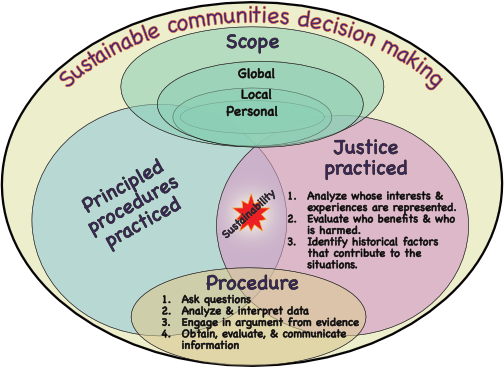
do a position analysis, and write or give an argument that answer the question or supports the claim.
Lab notes 10 - Summarize your argument
Materials
Focus questions:
- What can you claim about fresh water on Earth?
- What argument can you make for it?
Challenge
Argumentation
Information is gathered for each of the actions and outcomes, then their relationships can be compared by combining them with simple sentences or phrases by using a single-sentence-pattern to illustrates the relationships.
Information gathered
- P information for the principle being appealed to by the argument.
- Q information for the course of action under consideration.
- R information for the wrong that would be committed (by doing or not doing).
- S information for the consequences risked (by doing or not doing).
The single-sentence-pattern
Since we are committed to (P), we must rule out (Q); to do otherwise would give people the wrong impression of (R) and invite (S).
Worksheet to write your own.
Since we are committed to fresh water for everyone ,
which among other things requires ______________________________ (P),
we must rule out_______________________________________________(Q);
to do otherwise would give people the wrong impression of
______________________________________________________________ (R)
and invite _____________________________________________________ (S).
Effects of acidification of water on aquatic animals

Discover & extension activities & materials
- Environmental Quality - Air, Land, & Water Quality Vs. Pollution - resources & pictures
- Sustainability resources - sustainability resources with principled procedures to guide decision making with goals, roles, and suggestions to change and achieve sustainable communities for all community members to have a better quality life and a sustainable Earth.
- Home: Pedagogy - theory, curriculum, learning, human development, & teaching
- Home: Science - knowledge base, activities, pedagogical knowledge in all dimensions